AEO and GEO, explained: what they are, how they differ, and how to improve both
- AEO = making your brand the answer AI gives (won off-site, in reviews/listicles/threads). GEO = making your content the material that answer quotes (won on your own pages).
- AI assembles recommendations from third-party evidence — web mentions correlate 0.664 with AI visibility vs 0.218 for backlinks. Neither is classic SEO.
- GEO research (10,000 queries): quotable statistics, credible citations, and expert quotes measurably lift AI visibility; keyword stuffing hurts it — and the lift is biggest for lower-ranked sites.
- Improve AEO with a measure → map → earn → publish → re-measure loop. Improve GEO by writing one-question-one-page content packed with citable evidence, then staying crawlable.
Two acronyms get thrown around like they're the same thing. They're not.
AEO (Answer Engine Optimization) is making your brand the answer AI assistants give when someone asks what to buy, who to hire, or what to trust. GEO (Generative Engine Optimization) is making your content the material generative engines actually pull from and quote when they write that answer.
AEO is won mostly off your site — reviews, listicles, threads. GEO is won on the pages you publish. You need both, and this guide covers what each one is, exactly how they're different, and the concrete moves to improve each — with sources.
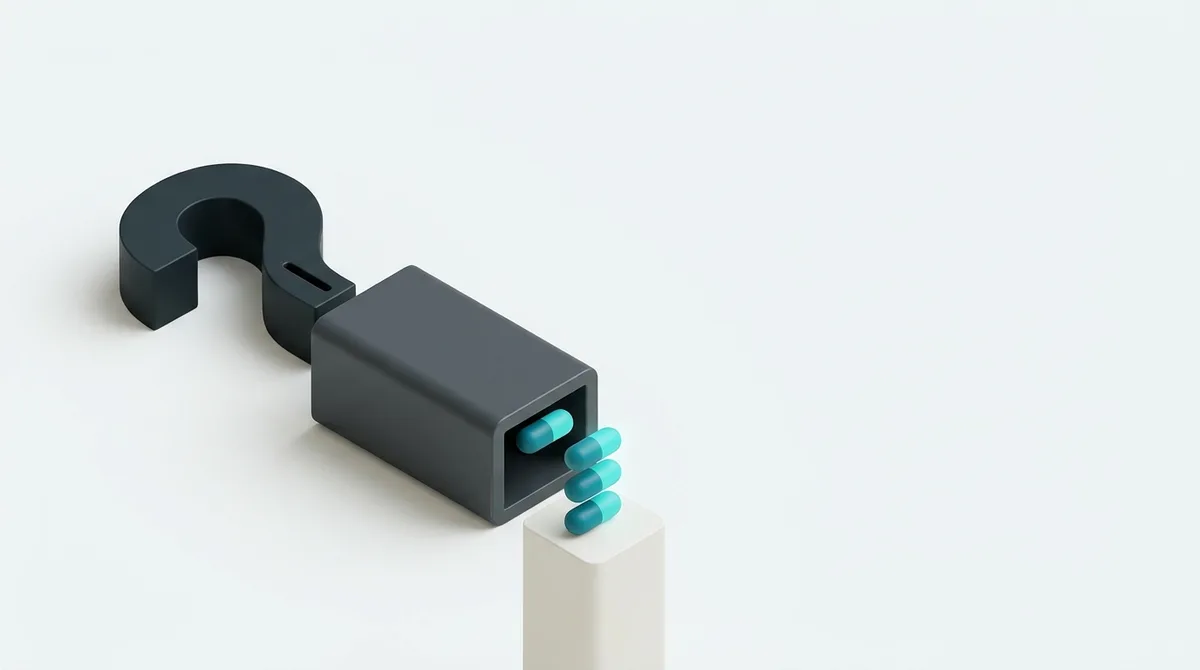
The whole game in one picture: a question goes in, a handful of names come out. AEO and GEO both decide whether yours is one of them.
01What AEO is
AEO is reputation engineering for machines that read. An AI assistant answering “best CRM for a small team” isn't ranking pages — it's synthesizing a recommendation from evidence: what review platforms, comparison articles, community threads, and news coverage collectively say about each brand. AEO is the discipline of making that evidence say your name, consistently, in the places AI reads. It's a brand-levelgame — the question it answers is “does the AI know my name?”
02What GEO is
GEO is the content-level craft inside that same game: shaping what you actually publish so generative engines retrieve it, quote it, and cite it. Where AEO asks whether AI knows your name, GEO asks whether your page is the raw material an AI answer gets built from. Unlike most marketing acronyms, GEO has an actual origin — a 2024 academic paper presented at KDD tested which content changes measurably increase visibility in AI-generated answers across 10,000 queries.1 That gives GEO an unusual luxury: measured results instead of folklore.
03How they actually differ
Put plainly: AEO decides whether AI knows your name. GEO decides whether your content is the thing it quotes when it does.A brand can win one without the other — a company with zero content but thousands of third-party reviews can still get named (that's AEO working with no GEO). A beautifully optimized page that nobody else links to or talks about rarely gets surfaced at all (that's GEO with no AEO backing it). They share one underlying engine: being genuinely citable, on-site and off.
And neither has much to do with classic SEO. Some SEO fundamentals transfer — clean structure, fast pages, content that answers questions plainly all make you easier to retrieve and quote. What doesn't transfer is the scoreboard: Ahrefs' study of 75,000 brands found backlinks — the core currency of SEO — correlate just 0.218 with AI visibility, while web mentions correlate 0.664, three times more strongly.2 AI models count how often the web talks about you, not how many links point at you.
How an AI recommendation is assembled
The brands in the answer come from the pages the model retrieves — not from your website
Both paths — live retrieval and training memory — are built from third-party evidence. That's the AEO layer. GEO decides whether your own pages are IN that evidence at all.
04Improving your AEO: the five-move loop
AEO is mostly won on pages you don't own — the listicles, review platforms, and threads that models retrieve and trust. Practically:
1. Baseline yourself. Ask the assistants the ten questions your buyers ask. Record who gets named. That number — your visibility rate — is the KPI everything else moves.
2. Map the sources. Ask the AI why — which lists, reviews, and threads it drew from. Those specific pages are your real battleground.
3. Close the earned gaps.Pitch the listicles you're missing from, build review volume on the platforms AI cites, show up honestly in the threads.
4. Publish direct answers. One clear page per buying question on your own site — this is where AEO and GEO overlap (see below).
5. Re-measure on a cadence. AI answers move constantly — a one-time audit is a snapshot of weather, not climate. Track weekly or daily and attribute the changes.
Where AEO effort actually goes
Ordered by how much of the answer each layer controls
Most brands over-invest in the owned layer because it's the one they control — that's the GEO work below. The answer is mostly decided in the other two, which is pure AEO.
05Improving your GEO: what the research says works
The GEO paper tested nine optimization methods against a baseline. The winners were about evidence density, not keywords — quotable statistics (+~37% visibility), credible citations (+~30%), and expert quotations (+~28%) all lifted AI visibility; keyword stuffing reduced it (−~10%).1The paper's most useful finding for smaller brands: the lifts were largest for lower-ranked sites— the opposite of classic SEO, where authority compounds toward incumbents. If you're not the category leader, GEO is currently the closest thing to an arbitrage you'll find.
The practical moves, distilled:
1. One question, one page. Structure content so each page answers a specific question a buyer actually asks, with the answer in the first two paragraphs.
2. Load-bearing numbers.Replace “many teams struggle with…” with a real statistic and its source. Models preferentially quote sentences that carry data.
3. Cite outward, generously. Pages that reference credible sources got quoted more. Citing well signals being worth citing.
4. Write for extraction.Clear claims, short paragraphs, descriptive headings, clean structure. If a passage can't stand alone out of context, it won't be the one quoted.
5. Stay crawlable. AI crawlers fetch at enormous scale but index less aggressively than Google and skip JavaScript-dependent content more often.3 Server-rendered, fast, and open beats clever.
GEO alone can't win — a perfectly optimized page with no off-site footprint is a beautifully formatted book nobody references, which is exactly why it needs AEO's earned-media work alongside it. (For the full research writeup and the complete GEO playbook, see our dedicated GEO guide.)
06Why this matters right now
Half of B2B software buyers now start research with an AI chatbot,4 ChatGPT alone serves 800 million weekly users,5 and Gartner projects traditional search volume to drop 25% by 2026 as assistants absorb the query stream.6 Because answers are winner-take-most — the same few names repeated across thousands of conversations — early movers on both AEO and GEO compound. The brands cementing themselves as the default answer today will be expensive to displace later.
And if you'd rather not run either loop by hand: this is exactly what Beacon does. Beacon measures how often ChatGPT, Gemini, Perplexity, Copilot, and Google AI Mode recommend your brand, maps the sources each answer cites, and turns every gap into a prioritized action — the “measure” step of both loops, automated. The free check baselines your visibility in about a minute.
Sources6 references
- Aggarwal et al. — GEO: Generative Engine Optimization (arXiv 2311.09735, KDD 2024) — arxiv.org (2024)
- Ahrefs — AI Overview brand visibility factors (75,000 brands) — ahrefs.com (2025)
- Vercel + MERJ — The rise of the AI crawler (500M+ GPTBot fetches) — vercel.com (2024)
- G2 — Half of B2B software buyers now start their research with AI chatbots — prnewswire.com (2025)
- TechCrunch — ChatGPT hits 800M weekly active users (OpenAI DevDay) — techcrunch.com (2025)
- Gartner — Search engine volume to drop 25% by 2026 due to AI chatbots — gartner.com (2024)
Baseline your AI visibility in a minute
Beacon tracks who AI recommends in your category daily — your visibility rate, the sources that decide it, and the moves to climb.